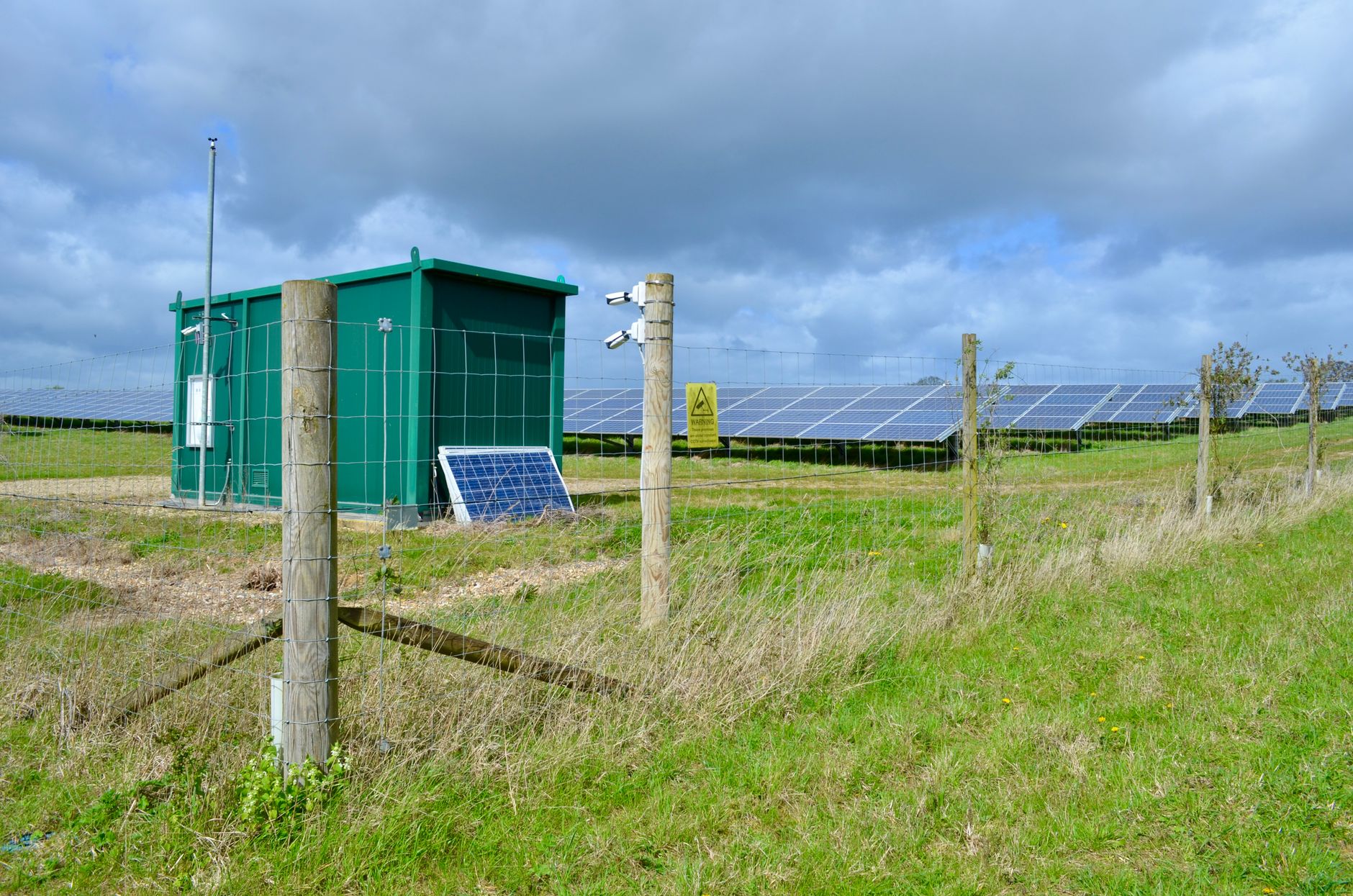
Deputy Agriculture Secretary Stephen Vaden sat down with farm reporters last month and explained why the government had stopped writing checks to rural Americans who wanted to install solar panels. We want to make certain that we are funding projects that will actually benefit rural America, he said, that make economic sense and that don't unnecessarily impact productive farmland. Then the USDA made it official. On April 15, 2026, just four days ago, the agency published a Notice of Rescission in the Federal Register that formally canceled the Rural Energy for America Program's current grant opportunity — the federal government's primary mechanism for getting renewable energy infrastructure onto American farms.
REAP has been running quietly since the early 2000s, but it became something approaching a real program after the Inflation Reduction Act infused it with over $2 billion starting in 2022. The agency raised reimbursement rates from 25% to 50% of project costs and started moving money in volume. Between fiscal 2023 and early 2025, USDA awarded over $1 billion through 6,800 REAP grants using IRA funds. Farmers in red states and blue states both took these grants. It was one of the few places where agricultural decarbonization and rural economic development actually aligned with federal spending. Now that era is over, and the agency has signaled it is not interested in continuing it.
The rescission is not a paperwork delay. USDA last obligated any REAP grants on September 30, 2025. Since October 1, 2025, the start of fiscal 2026, the agency has made zero REAP grant awards. The April 15 notice formalizes that freeze. The agency says it is rewriting REAP's rules to comply with an executive order targeting wind and solar subsidies that President Trump signed in July 2025. Any farmer who submitted a REAP application under the old rules will have to submit a new one and comply with whatever restrictions the revised regulation imposes. One Ohio-based REAP grant writer says the sudden freeze has put more than 100 applications on hold, representing over $20 million in stalled projects. Those applicants now exist in a state of regulatory limbo, unable to move forward and with no clear timeline for when they can reapply.
What created this moment was not accident or incompetence but a deliberate collision between two timelines. The Inflation Reduction Act's renewable energy spending was always temporary — designed to supercharge a particular policy goal for a defined period. That money began flowing in 2022 and has been allocated in large tranches since. Those allocations are now running out. Once the IRA money exhausts, REAP's baseline funding returns to approximately $50 million annually under the current Farm Bill. That is a collapse from the current run rate. The agency faced a choice: defend REAP and prepare for the budget contraction, or use the transition as an opportunity to reshape the program in line with the new administration's priorities. It chose the second path. Deputy Secretary Vaden's language about not impacting productive farmland is the administrative cover. The actual constraint is the executive order on solar and wind subsidies. USDA is using the funding pause to rewrite the rule in ways that will make solar less attractive to fund, period.
The winners here are straightforward: utility-scale solar developers with balance sheets large enough to self-fund projects, and the producers of domestically manufactured renewable equipment. The loser is the farmer with 100 acres and an energy bill. Here is why. The Department of Energy estimates 85% of U.S. solar modules are imported, primarily from China. If the revised REAP rules place restrictions on foreign-manufactured equipment, project costs spike for the small agricultural operations the program was designed to serve. A 50% federal grant made a rooftop solar installation financially viable for a mid-sized farm. A 50% grant with an equipment restriction might not. No grant at all certainly does not. The Environmental Law and Policy Center, the National Sustainable Agriculture Coalition, and a bipartisan set of agricultural voices have already started pushing back. Matt Ohloff of ELPC said it plainly: as the nation struggles with rising energy costs, USDA just announced its failure to implement an existing program specifically designed to help farmers and rural small businesses save on energy costs. Rep. Chellie Pingree of Maine called it just one more blow to especially small- to medium-sized farmers, who are having a tough time making a living right now. Even Justin Barnhart, an Ohio REAP grant writer and Republican political consultant, said the move was not only confusing, it was wrong.
The read is this: REAP is being deliberately defunded by regulatory stalling while the IRA allocation window closes. When the new rule eventually lands, expect it to contain language discouraging solar on productive farmland, raising equipment sourcing thresholds, or both. The agency will frame this as prudent stewardship. What it actually is is policy reversal dressed in administrative process. The signal sent to the rural energy market is unmistakable: federal support for on-farm renewables is not coming back at this scale. Farmers learned the hard way that a 50% federal grant has an expiration date. Next time, many will not bother applying.
Watch three things. First, the timeline for the proposed REAP rule. The Federal Register is the only official source for this — the agency has given no public deadline, which is itself telling. Second, the language in the House version of the upcoming Farm Bill, which includes provisions allowing USDA Rural Development funding for solar panels on five acres without restrictions. If that language survives negotiation, it signals that congressional intent on agricultural solar diverges sharply from administration policy — a useful marker for understanding whether the REAP pause is temporary policy correction or permanent reorientation. Third, whether any of the 100-plus stalled applications get retroactively funded under the old terms. If the agency quietly processes some of them before the new rule lands, that suggests internal disagreement about the strategy. If none get funded, the message is consistent: the IRA era for REAP is finished.