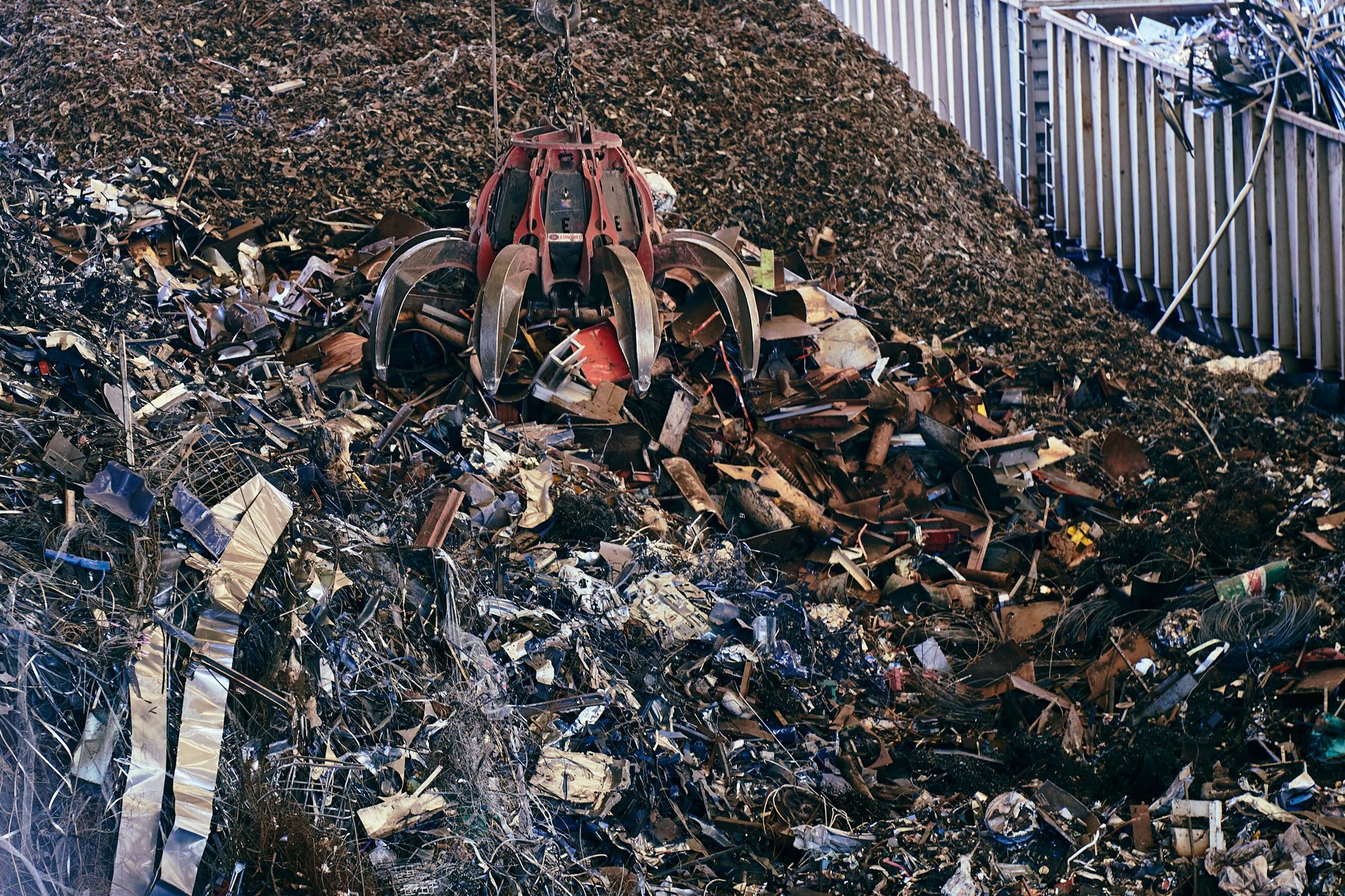
Abu Dhabi recently extended and deepened its contract with Veolia Environnement to run the Mafraq 2 construction and demolition waste recycling plant, the emirate's flagship facility for converting building rubble back into usable materials. The move is not a surprise announcement, it is a vote of confidence in a model that has spent the last several years proving itself against a basic question: can recycled aggregates actually replace virgin material on real projects? The answer, at least in Abu Dhabi, appears to be yes.
Mafraq 2 sits in the desert outside the UAE capital and processes mixed construction debris into certified secondary aggregates that feed directly back into local infrastructure projects. The expanded contract means higher throughput targets and deeper integration with Abu Dhabi's circular-economy and net-zero commitments. For a region that has historically quarried virgin material for every building project, this represents a shift in procurement and spec behavior, contractors are now required to accept and build with recycled aggregate, which means the facility has to deliver material that meets their standards at a cost that beats virgin sources. That is the real test. Capacity is not the bottleneck in construction waste circularity. Demand is.
The contract expansion lands in a broader context of regional circular-economy ambition. Abu Dhabi's Tadweer Group targets diverting 80% of waste from landfills by 2030/2031. Mafraq 2 is the delivery mechanism, a single site that has to absorb, sort, and reprocess what the emirate's construction boom generates. If the facility hits its throughput targets and the recycled aggregate gets spec'd into major projects, it becomes a proof case for other Gulf operators who have been slower to adopt material loops. If it does not, the facility remains a boutique operation subsidized by government circular-economy policy rather than market economics.
The global battery-recycling landscape reveals a parallel tension. The World Resources Institute projects 20.5 million tons of retired EV batteries globally by 2040, and China alone could see 820,000 tons by the end of 2026, according to EVTank estimates. China already holds the largest share of battery recycling infrastructure globally, capacity is not scarce. Yet an estimated 20–30% of retired batteries still move through unregulated channels, which means enforcement and incentive alignment are failing faster than infrastructure deployment. The EU established its €1.5 billion Battery Booster Facility on June 9, to support battery cell manufacturers scaling up production in Europe via interest-free loans. The money is flowing. The question is whether regulators can close the gap between what gets recycled officially and what disappears into informal networks.
For Veolia and similar operators, the margin lives in the gap between collection cost and material value. A construction debris stream in Abu Dhabi is easier to incentivize than a used EV battery in a developing market where the cell itself still holds residual energy and black-market buyers pay cash. Mafraq 2 works because a government client is mandating adoption and underwriting the transition cost. Battery recycling in emerging markets will scale only when either regulation tightens enforcement, cobalt and lithium prices rise high enough to justify formal recovery, or both. Right now, the formal infrastructure is outrunning the incentive to use it.
Watch three markers to see whether this model holds: facility throughput targets against plan, the adoption rate of recycled aggregate in major Abu Dhabi infrastructure contracts (name the projects), and whether Abu Dhabi hits its 80% waste-diversion goal by 2030/2031. If Mafraq 2 becomes a standard feedstock for local construction, the model replicates. If the facility maxes out at 60% utilization and contractors continue to spec virgin material, the circular loop is policy-driven, not market-driven, which means it stops when subsidies do.